
dvLED Controllers: The Intelligence Powering Direct-View LED Displays

Direct-view LED (dvLED) video walls have become the visual centerpiece in spaces where impact, clarity, and scale matter most. From sports venues (like our work with the Indy Motor Speedway) to broadcast studios, corporate headquarters, universities, and control rooms, dvLED technology delivers seamless imagery, bold color, and virtually unlimited design flexibility.
While most end users focus on the LED panels themselves, there’s a critical component working behind the scenes that determines how well the display actually performs, and that's the dvLED controller. Without it, even the most premium LED panels are nothing more than a wall of illuminated pixels. We are going to break down the technology and why it's so important, and discuss one of the leading brands of controllers you can buy right here from the K-WAV site!
What Is a dvLED Controller?
A dvLED controller functions as the main processing hub for a direct-view LED display. It receives video and data from content sources, processes that information, and distributes it precisely across thousands, or even millions of individual LED pixels. Controllers vary widely in capability, form factor, and price. Selecting the right controller is not a one-size-fits-all decision; it must be matched to the resolution, application, content type, and performance expectations of each project.
For AV integrators, understanding both what a controller does and what features are required for a specific use case is critical. Time spent evaluating manufacturers, testing demos, and exploring configuration options can make the difference between a good display and a great one. At K-WAV we are happy to provide consultative support in these areas to make certain that the end-user is fully satisfied with the outcome of their display.
There are two main types of controller formats. The first is software driven where applications work with hardware for control that can be networked or flexible. The second would be a more physical solution or a dedicated hardware controller. In this instance these can be rack mounted and affixed in the room itself with the LED offering best in class reliability.
These controllers reside between the content source and the LED cabinets. The controller then ensures that each pixel activates at the correct time, & with proper color, and brightness level. It also allows for real-time adjustments such as brightness tuning, color calibration, and source switching as conditions or requirements change.
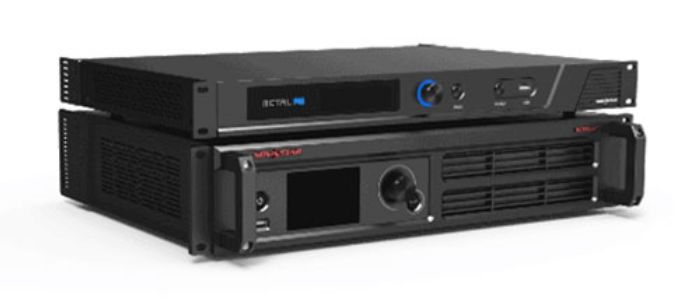
So What Does that dvLED Controller Actually Do?
It performs several essential tasks that directly impact image quality and system performance:
Pixel Mapping & Other Processes
Because dvLED walls are modular, the controller must understand the exact physical layout of the display. It maps content accurately so every pixel appears in the correct position, regardless of screen size or shape. The controller also excepts a signal from a variety of capable sources and then decodes and optimizes the signal specifically for LED output. Controllers also help with switching & routing of signals and a variety of data processes.
Color & Brightness Calibration
Controllers apply calibration data to maintain consistent color, and brightness across the entire wall, even when LED modules come from different production batches or age at different rates, which is common.
Scaling & Aspect Ratio Control
Most content does not perfectly match the native resolution of an LED wall. Controllers intelligently scale content up or down while preserving image integrity, and can blank unused areas when aspect ratios don’t align.
.
An Example of Seamless Switching
In a sports arena, or stadium, the controller may instantly switch from live gameplay to sponsor content. In corporate settings, it may toggle between video conferencing, lobby dashboards, and presentations without visible delay.
What Integrators & End Users Should Avoid?
Don't devalue the processing needed, It can lead to resolution or frame-rate limitations
Thinking the system doesn't matter, you must think of the entire system and uses
Many skip redundancy in environments where downtime is unacceptable
Thinking price matter most, rather than long-term performance and reliability
Final Thoughts
A dvLED controller is far more than a signal converter, it is the intelligence that brings an LED wall to life. From processing content and mapping pixels to managing color accuracy and enabling seamless source switching, the controller defines how well the display performs.
For integrators and system designers, selecting the right controller is essential to meeting today’s performance expectations while preparing for future demands. As AI, automation, and cloud connectivity continue to evolve, dvLED controllers are becoming intelligent display managers—and the brains behind your video wall are only getting smarter.
We recommend using a trusted brand in the controller space NovaStar. In fact, we believe in their products so much that we have them for sale on our site here. If you'd like to have a discussion around your needs, or what controller is right for your project please contact us, and we'd be happy to chat.


Comments